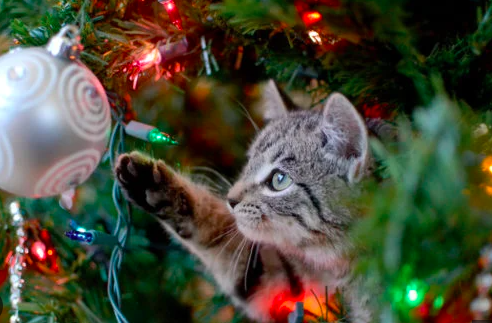
Cats are naturally curious creatures, and the holiday season can be a recipe for disaster when it comes to Christmas trees. The sight of glittering ornaments, dangling tinsel, and twinkling lights is irresistible to many cats. Unfortunately, this curiosity can lead to broken ornaments, knocked-over trees, and even injuries for your furry friend. Learning how to cat proof your Christmas tree is essential for keeping both your cat and your decorations safe this holiday season.
Whether you have a playful kitten or an adult cat who loves to climb, implementing a few strategic precautions can save you from a Christmas catastrophe. Here’s a comprehensive guide to protecting your tree while allowing your cat to enjoy the festive season safely.
Step 1: Choose the Right Tree and Location
Selecting a safe tree:
Artificial trees are generally safer than real ones because real tree needles can be sharp and potentially mildly toxic if ingested. If you do choose a real tree, make sure the water reservoir is completely inaccessible to your cat to prevent accidental poisoning.
Tree size matters:
Smaller trees are easier to manage and safer for playful kittens. If your tree is shorter than six feet, consider placing it on a sturdy table to keep it above your cat’s usual jumping height.
Pick a safe location:
Place the tree away from furniture or shelves that your cat could use as a launchpad. Anchor the tree to a wall or ceiling for extra stability. Ensure there is enough space around the tree to prevent accidental bumps from your feline acrobat.
Step 2: Decorate Strategically
Adjust your cat before decorating:
Before adding ornaments, let your cat explore the tree while unsupervised. If they show signs of attempting to climb, gently discourage them with a water spritz and a firm “no.” This helps your cat learn that the tree is off-limits.
Keep cats away during decoration:
While decorating, it’s best to keep your cat in another room. Glittering ornaments and dangling decorations can encourage playful behavior, so decorating without interference reduces temptation.
Choose cat-safe ornaments:
-
Use matte, flat, or felt ornaments instead of shiny, dangling ones.
-
Avoid glass ornaments; choose plastic or shatter-proof options.
-
Secure ornaments tightly with metal hooks or clamp-style hangers.
-
Never use catnip-filled decorations.
Place delicate items higher:
Position fragile or enticing ornaments in the top two-thirds of the tree. This keeps breakable or dangerous items out of reach. Avoid tinsel near the lower branches, as ingestion can cause intestinal blockages.
Step 3: Use Deterrents and Repellents
Sprays to repel cats:
Cat-repellent sprays, citrus sprays, or a light mist of apple cider vinegar can help keep your cat away. Cats dislike the smell of citrus, so placing orange peels around the base or spraying the tree lightly with orange juice can be effective.
Citrus-based deterrents:
Citronella oil can also deter cats when diluted with water and sprayed lightly on the tree or surrounding pine cones. The smell is unpleasant for cats but tolerable for humans.
Secure electrical wires:
Wrap or tape excess wires to prevent dangling. Use wire covers if needed. You can also lightly mist cords with cat-repellent spray, avoiding heavy saturation. Always unplug lights when the room is unattended.
Step 4: Distract Your Cat
Provide alternatives:
Place favorite toys, scratching posts, or play areas near the tree but not on it. Encourage your cat to use these designated areas.
Playtime first:
Engage your cat in active play sessions before decorating. A well-exercised cat is less likely to attack the tree.
Separate essentials:
Keep your cat’s water, food, and bedding in a different room to reduce temptation and encourage the cat to explore other areas.
Step 5: Extra Safety Precautions
Avoid hazardous decorations:
-
Tinsel, ribbons, and artificial snow can be dangerous if ingested.
-
Chocolate, real candles, or edible decorations may pose health risks.
Secure the base:
Choose a firm, stable tree stand and consider anchoring the tree with wire to a wall. Cover electrical elements with a tree skirt for a neat and safe appearance.
Monitor your cat:
Even with precautions, always supervise your cat around the tree. Persistent climbers may require additional barriers like pet gates or motion-activated deterrents.
Conclusion
Learning how to cat proof your Christmas tree takes careful planning and a few smart strategies. By choosing the right tree, decorating thoughtfully, using deterrents, and providing alternatives, you can enjoy a festive home while keeping your cat safe. With the right precautions, your decorations will remain intact, and your feline friend will enjoy a secure and happy holiday season.


