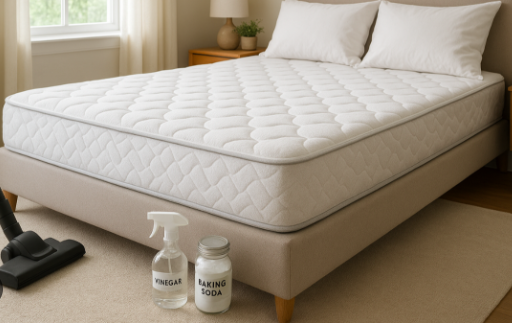
A deep clean mattress at home routine is one of the most overlooked but important household tasks. Every night, your mattress absorbs sweat, dead skin cells, dust, bacteria, and allergens. Over time, this buildup causes bad odours, allergy flare-ups, poor sleep quality, and even shortens the lifespan of your mattress.
Deep cleaning your mattress at least twice a year helps restore freshness, improve sleep hygiene, and protect your health. The good news is that you do not need expensive equipment or professional services to achieve professional-level results. With simple household items and the right method, you can deep clean your mattress at home like a pro.
This complete guide walks you step by step through mattress deep cleaning, stain removal, deodorising, sanitising, and long-term maintenance.
Why Deep Cleaning Your Mattress Matters
Deep cleaning your mattress is essential for both health and comfort. Every time you sleep, your body releases sweat and sheds skin cells. Dust mites feed on this organic material and multiply rapidly inside mattresses.
Studies show that an unclean mattress can contain millions of dust mites, bacteria, and allergens, all of which negatively affect sleep and respiratory health.
Health Benefits of Mattress Deep Cleaning
-
Reduces dust mites and allergen exposure
-
Improves breathing and sleep quality
-
Lowers the risk of skin irritation and asthma symptoms
-
Eliminates bacteria and odour-causing microbes
People who clean their mattresses regularly often report fewer allergy symptoms and deeper, uninterrupted sleep.
Longevity Benefits for Your Mattress
-
Prevents stains from setting permanently
-
Stops odour buildup
-
Protects fabric integrity
-
Helps the mattress retain its shape longer
Replacing a mattress is expensive, so regular deep cleaning is a smart investment.
Signs Your Mattress Needs Deep Cleaning
-
Yellow or brown stains on the surface
-
Musty or unpleasant smells
-
Increased sneezing or coughing in bed
-
Itchy skin after sleeping
-
Visible dust when sheets are removed
If you notice any of these signs, it is time to deep clean your mattress properly.
Step 1: Preparing Your Mattress for Cleaning
Proper preparation makes mattress cleaning easier and more effective.
Remove All Bedding and Pillows
Strip the bed completely. Remove sheets, duvet covers, pillowcases, and pillows. Wash them in hot water if the fabric allows. This removes bacteria and dust mites before they return to the mattress.
Ventilate the Room
Open windows wide to allow fresh air circulation. Good airflow speeds drying and reduces lingering odours.
Vacuum Surroundings and Mattress Edges
Vacuum the floor around the bed first. Then vacuum the mattress edges and seams to prevent dirt from spreading back onto the surface.
Inspect the Mattress Carefully
Check for stains, tears, and manufacturer care labels. Identify problem areas so you know what treatment is required.
Step 2: Vacuuming and Removing Dust and Debris
Vacuuming is the foundation of effective mattress cleaning.
Vacuum the Mattress Surface Thoroughly
Use a vacuum cleaner with an upholstery attachment. Move slowly across the mattress surface using overlapping passes. Vacuum the top, sides, and underside if your mattress can be flipped.
Slow movements lift embedded dust, hair, and dead skin far better than quick passes.
Use Crevice Tools for Seams
Mattress seams trap the most debris. Use a crevice tool to clean piping and stitched edges thoroughly. Go over each seam twice for best results.
Use a HEPA Vacuum for Allergy Relief
If allergies or asthma are a concern, a HEPA-filter vacuum is highly recommended. It traps microscopic allergens instead of releasing them back into the air.
Vacuum your mattress every three months for maintenance, and always before deep cleaning.
Step 3: Tackling Stains Professionally at Home
Knowing how to remove mattress stains safely is key. Always blot stains gently and avoid soaking the mattress.
Removing Blood Stains
-
Use cold water only
-
Apply hydrogen peroxide mixed with baking soda
-
Dab gently and let sit for 10 minutes
-
Blot with a clean cloth
-
Dry fully with airflow
Hot water sets blood stains permanently, so avoid it completely.
Removing Urine Stains and Odours
-
Mix one part white vinegar with two parts water
-
Spray lightly on the stain
-
Blot immediately
-
Sprinkle baking soda generously
-
Leave overnight and vacuum
This neutralises odours and removes bacteria.
Removing Sweat and Oil Stains
-
Mix mild dish soap with warm water
-
Apply gently with a cloth
-
Blot until stain fades
-
Rinse by blotting with clean water
-
Air dry completely
Treat stains as soon as possible to prevent deep discoloration.
Step 4: Deodorising and Refreshing Your Mattress
Deodorising your mattress removes trapped smells and moisture.
Apply Baking Soda Generously
Sprinkle baking soda evenly across the entire mattress. Use enough to form a light coating. Gently rub it in using your hands or a soft brush.
Leave it for at least four hours, but overnight works best.
Optional Vinegar Mist for Strong Odours
Mix equal parts white vinegar and water in a spray bottle. Lightly mist the mattress before applying baking soda. Do not soak.
The vinegar smell disappears once dry, taking stubborn odours with it.
Vacuum and Air Dry
Vacuum all baking soda thoroughly. Place the mattress near an open window or in sunlight if possible. Sunlight naturally reduces moisture and bacteria.
Step 5: Optional Deep Sanitation with Steam Cleaning
Steam cleaning provides deep sanitation but must be done carefully.
Using a Garment Steamer Safely
-
Check the mattress care label first
-
Use a handheld garment steamer
-
Hold the steamer 5 to 10 cm away
-
Move slowly without soaking
-
Cover small sections at a time
Steam kills dust mites and bacteria effectively.
Follow-Up Drying and Vacuuming
Allow the mattress to dry for at least four to six hours. Use fans and open windows to speed up drying. Once dry, vacuum again to remove dead mites and residue.
Limit steam cleaning to two or three times per year.
Maintenance Tips to Keep Your Mattress Clean
Regular mattress maintenance prevents heavy buildup and reduces the need for frequent deep cleaning.
Monthly Vacuuming
Vacuum your mattress once a month when changing sheets.
Use a Mattress Protector
A waterproof mattress protector blocks sweat, spills, and allergens. Wash it every two months.
Rotate or Flip the Mattress
Rotate the mattress head to foot every three months. Flip if the design allows.
Quick Freshening Tips
-
Sprinkle baking soda for two hours and vacuum
-
Air out the mattress on dry days
-
Spot clean spills immediately
Common Questions About Mattress Deep Cleaning
How often should I deep clean my mattress?
Deep clean every six months. Vacuum monthly.
Can I use bleach on my mattress?
No. Bleach damages fabric and causes yellowing.
How do I dry a mattress quickly?
Use fans, open windows, and cool air from a hairdryer for small areas.
Will steam cleaning damage my mattress?
It is safe if used lightly and dried properly. Always check the label.
How do I remove old odours completely?
Apply baking soda thickly, leave overnight, then vacuum thoroughly.
Final Expert Advice on Mattress Deep Cleaning
Deep cleaning your mattress improves sleep quality, protects health, and extends mattress life. The key steps are simple but effective.
Vacuum thoroughly on both sides, spot clean stains gently with mild solutions, deodorise using baking soda, and allow full drying before replacing bedding.
Deep clean every six months and maintain monthly care. Your mattress will stay fresh, supportive, and comfortable for years to come.
Start today, your bed will thank you.


